Interview with João Louro
Verónica de Mello: The exhibition presents thought as a “muscle” that requires training. How do you view artistic practice as a form of intellectual exercise?
João Louro: Artistic expression, which is materialised in the form of an artwork and is termed a “work of art”, is a very specific reflection of each artist in their own time. Works of art can emerge in various forms, for various reasons. Art is not confined to a single path. How might one define the intention of the earliest “representers” – later, much later, termed artists – when they externalised and displayed in Palaeolithic caves 50,000 years ago? They were speaking of their reality, they spoke of the unknown, they invoked deities, they created symbols (stored language), they marked their time by inscribing on the walls the motifs of the reality depicted. And reality is not just what one sees; there is wind and fear, heat and love. None of that is visible; it cannot be seen, but we know it is there. All of this is the artist’s reality at a particular moment in history. There is, therefore, something more beyond this training. There is a set of phenomena in the Earth’s breathing that can only be perceived with sensitivity. A concept that is feared, especially because in a society that demands performance and productivity, and that rejects anything that might halt or hinder performance, it ends up being ridiculed and diminished, pushed to one side and relegated to the 19th century.
Following this line of thought, I would say that artistic practice is not an intellectual exercise, but rather an exercise in sensitivity. Only from there is it possible to produce art, which is why not everyone can be an artist, as Duchamp proclaimed.
VDM: The classical idea of mens sana in corpore sano runs, in a way, through this project. How do you interpret this relationship between body and mind in the context of your work?
JL: The body is the tool that was given to us without our asking for it. We are born and cast into the world, without any skill and without instructions on how to use the equipment that comes with that birth. We are the mammal that adapts most slowly after birth. Yet it is through the body that we voraciously swallow up the world, little by little, using the senses at our disposal to register this world that has also been given to us. We were offered life, and we were offered the world, body and environment. We then learn to harness these extensions to reach the mind, the core, the black box, everything happening around us, everything that is physical and then everything that is thought, in which I include the spiritual. At first it is the basic needs; only later do we begin to look up at the sky. Despite this, “a sound mind in a sound body” is not always the best way to define an artist. Consider Rimbaud, Antonin Artaud, Van Gogh, Francis Bacon, and so forth. There are countless examples. Artists choose to take risks; or rather, they can only move forward by doing so, often at the cost of physical harm. Artists work with material that burns; the journey (the question) is dangerous. Doors open and we set off.
VDM: Can your artworks be understood as a provocation to contemporary society? Is there a critical intent in relation to current forms of cultural consumption?
JL: My works are questions and discoveries. And there is no provocation in that. They move in the opposite direction, within contemporary society as we know it, and are reflections and observations made naturally. That is my inevitability as an artist: to ask questions, gather answers and record them. I look through the space left by the obvious. This was my leap and my commitment to the work I produce, without seeking to indoctrinate or offend, without ever being propagandistic. These are works that distance themselves from commentary on consumer society; they move away from the excess of light and transparency (the digital world), that ghostly presence, devoid of contours or areas of shadow. The digital landscape and technological consumer society do not interest me. My work does not avoid them because I live in this space-time and, knowing there is no “outside”, I move in another direction.
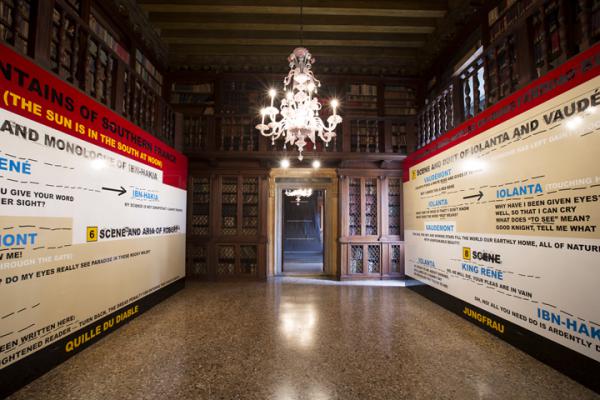
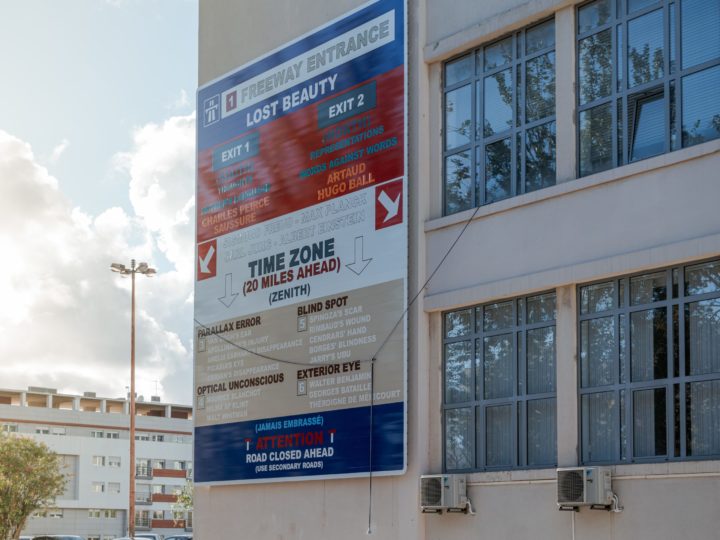
VDM: In Blind Images, the image is concealed and replaced by language. What interests you most: the absence of image or the mental activation it produces?
JL: The Blind Images arise from this unease caused by excess: the excess of images. An uninterrupted torrent of images. It is estimated that around 5.3 million images are produced every day. It was the superimposition of images that produced the original blackness of the Blind Images. Then came the erasure, the scraping down to the very core of the paper. First came the excess and superimposition of images; then came their erasure. The images had exhausted me and I could no longer (I believe nobody can) “read” an image. There is an overabundance that eliminates understanding and interpretation, that creates noise, eliminating silence and distance. I believe this serves a purpose and feeds the society in which we live, at a stage which is a perpetual present and seeks homogeneity whilst avoiding complexity, making everything shiny and flat, always demanding attention.
A work of art does not scream for attention. It is simply there! Like a landscape. It is there, waiting. None of this is commercial and is therefore of no interest to producers of content for consumption, who seek to shorten time, cause addiction to seduction, transform everyone into hysterical consumers, jumping from stimulus to stimulus. We live in an age of stimuli, where that which does not catch the eye is of little interest.
I realised that the images – obliterated, erased or covered up, yet maintaining their original text – had the capacity to activate the eye’s “blind spot”, the only point in the eyeball that obscures vision, where the optic nerve connects to the globe. It is through text that this vision is activated and the eye sees what is not there. In this sense, it is the absence of the image that triggers a mental response and, therefore, this mental activation depends on the absence of the image to process this “seeing”.
Entrevista com João Louro
Verónica de Mello: A exposição propõe o pensamento como um músculo que exige treino. Como entendes a prática artística enquanto forma de exercício intelectual?
João Louro: A expressão artística, que é aquilo que se materializa em forma de obra, e denominada “obra de arte”, é um reflexo muito específico de cada artista no seu tempo. As obras de arte podem surgir de várias formas, por vários motivos. A arte não se encerra num caminho unívoco. Como definir a vontade dos primeiros “representadores”, mais tarde, muito mais tarde denominados artistas, quando exteriorizaram e expunham nas cavernas do paleolítico há 50.000 anos? Estavam a falar da sua realidade, falavam do desconhecido, chamavam divindades, criaram símbolos (linguagem armazenada), marcavam o seu tempo inscrevendo nas paredes os motivos da realidade que recortaram. E a realidade também não é só aquilo que se vê, existe o vento e o medo, o calor e o amor. Nada disso é óptico, não se vê, mas sabe-se que está lá.
Tudo isso é a realidade do artista num determinado momento da história. Há, portanto, algo mais para além desse treino que referiste. Há um conjunto de fenómenos no respirar da Terra, que só é possível percebê-los a partir da sensibilidade. Um conceito muito temido em ser usado, sobretudo porque numa sociedade que exige performance, produtividade e rejeita tudo o que possa fazer parar ou atrapalhar a performance, acaba ridicularizada e diminuída, encostada numa parede e remetida ao sec. XIX.
Seguindo esta pista, diria que a pratica artística não é um exercício intelectual, mas sim de sensibilidade. Só a partir daí é possível produzir arte e por isso nem todos podem ser artistas, como foi apregoado por Duchamp.
VM: A ideia clássica de mens sana in corpore sano atravessa, de algum modo, este projeto. Como interpreta essa relação entre corpo e mente no contexto do seu trabalho?
JL: O corpo é a ferramenta que nos foi oferecida sem a termos requisitado. Nascemos e somos lançados no mundo, sem qualquer perícia e sem instruções sobre o equipamento que vem com esse nascimento. Somo o mamífero mais lento a adaptar-se após o nascimento. Contudo é através do corpo que vamos vorazmente engolindo o mundo, aos poucos, usando os sentidos que temos ao nosso dispor e com eles registar esse mundo que também nos foi dado. Ofereceram-nos a vida e ofereceram-nos o mundo, o corpo e o meio. Depois vamos aprendendo a potencializar essas extensões para fazer chegar à mente, à central, à caixa negra, tudo o que passa à nossa volta, tudo o que é físico e depois tudo o que é pensamento, onde incluo o espiritual. No início são as necessidades básicas, só mais tarde começamos a olhar para o céu.
Apesar disso, nem sempre a “mente sã em corpo são” é a melhor forma de definir um artista. Veja-se Rimbaud, Antonin Artaud, Van Gogh, Francis Bacon, etc. Há inúmeros exemplos. Os artistas decidem correr riscos, ou melhor, é-lhes inevitável avançar se não for dessa forma e isso, muitas vezes, é feito com prejuízo físico. Os artistas trabalham com matéria que queima, o percurso (a pergunta) é perigoso(a). Abrem-se portas e lançamo-nos.
VM: As suas obras podem ser entendidas como uma provocação à sociedade contemporânea. Existe uma intenção crítica em relação às formas atuais de consumo cultural?
JL: As minhas obras são perguntas e descobertas. E não há nisso qualquer provocação. Elas andam no sentido inverso, no interior da sociedade contemporânea tal como nos é dada a conhecer e são reflexões e registos feitos de forma natural. Essa é a minha inevitabilidade como artista, fazer perguntas, recolher respostas e registá-las. Eu olho através do espaço deixado pelo óbvio. Esse foi o meu salto e compromisso com a obra que produzo, sem querer doutrinar ou afrontar, sem nunca ser panfletário. São obras que se afastam do comentário sobre a sociedade de consumo, afastam-se do excesso de luz e da transparência (o meio do digital), essa presença fantasmática, sem contornos ou zonas de sombra. A paisagem digital e a sociedade tecnológica tardia e de consumo não me interessam. O meu trabalho não a evita, porque vivo dentro deste espaço-tempo e, sabendo que não há lado de fora, sigo noutra direção.
VM: Nas Blind Images, a imagem é ocultada e substituída pela linguagem. O que te interessa mais: a ausência da imagem ou a ativação mental que ela provoca?
JL: As Blind Images nascem desse mal-estar provocado pelo excesso: o excesso de imagens. Há uma torrente ininterrupta de imagens. Estima-se que sejam produzidas todos os dias cerca de 5,3 milhões de imagens.
Foi a sobreposição das imagens que produziu o negro original das Blind Images. Depois foi o apagamento, a rasura até ao osso do papel. Em primeiro lugar foi o excesso e a sobreposição de imagens e depois foi o seu apagamento.
As imagens tinham-me esgotado e já não conseguia, creio que ninguém consegue, “ler” uma imagem. Há uma sobrepovoação que elimina a compreensão e a leitura, que cria ruído e elimina o silêncio e a distância. Creio que isso tem um propósito e alimenta a sociedade em que vivemos, nesse estágio que é um presente perpétuo e que procura homogeneidade, enquanto evita a complexidade, torna tudo brilhante e plano, sempre a exigir atenção.
Uma obra de arte não grita por atenção. Está lá! É como uma paisagem. Está lá à espera. Nada disto é comercial e por isso não interessa aos produtores de assuntos para consumo, que pretendem encurtar o tempo, viciar na sedução, transformar todos em consumidores histéricos, que saltam de estímulo em estímulo. Vivemos num tempo de estímulos e se algo não piscar o olho, já pouco interessa.
Quando percebi que as imagens obliteradas, rasuradas ou tapadas, mas que se mantinham junto ao seu texto original, tinham a capacidade de ativar o “ponto cego” do olho, o único ponto que no globo ocular não permite ver e que é o local onde o nervo óptico acopla a órbita. É pelo texto que se ativa esse “ver” e o olho vê o que não está lá. Nesse sentido é a ausência da imagem que ativa mentalmente e, por isso, a ativação mental depende da ausência da imagem para se processar esse “ver”.