João Louro’s “Off the Beaten Tracks”
Rodrigo Magalhães, 2025
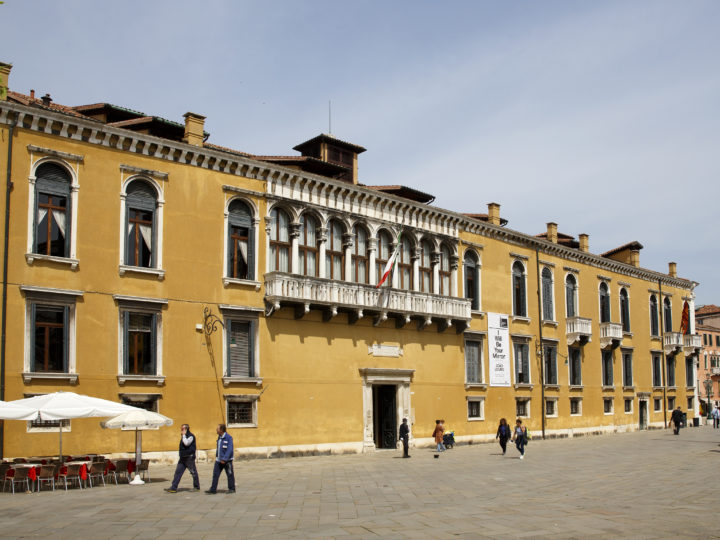
There is a Heideggerian intentionality in João Louro’s work when one enters the labyrinthine paths of an unrestrained nature untouched by anthropocentric cultural intrusions. Along these trails, pathways, and sinuosities—mapped onto the material fabric of the earth shaped by the naturalness of its own line—there emerges a position of relentless impassibility toward influences and territorializations external to the natural matrix. Louro operates through the conceptual dichotomy between the atemporal belonging involved in the probing of clearings within forest territories or within the impenetrable densities of woods (the matrix), and the quantifiable belonging of an intention to culturally synchronize (to insert natural time into historical-cultural time) the inscribed traces of human ontology within a possible relational conjunction. Caminhos de Floresta brings to Galeria Fernando Santos a plausible intention toward the (in)definition of the parameters of exchange between the concealed paths of nature’s primordial mystery and the trails uncovered by humankind in its attempt to instrumentalize natural forces for culturally mediated benefit.
The semantic bonds linking Heidegger to language arise from an instilled polyvalent polysemy that possesses the capacity to unveil, to unconceal from the original matrix of crystalline language, indefinite possibilities for the readjustment or reordering of signifying conceptualization in constant movement and oscillation. These forest paths (Holzwege) are not indifferent to such premises of signification, for Heidegger exemplifies this with the motto Wege, nicht Werke (“paths, not works”), illustrating the necessity of setting oneself on the way—or being on the way—toward a place that cannot be demonstrated through the clarifying and limiting proposition of the “work,” but rather through an attempt to become entangled within the immensity of the forest. In the prologue to the Portuguese edition, Irene Borges Duarte notes that the translation obscured an essential nuance of the original expression auf dem Holzweg sein, translated as “taking shortcuts,” which refers us to the latent equivocacy of error, of taking a wrong path, of venturing into loss. Duarte reminds us that the forest is not a park, cultivated and sown by the human hand, but rather wilderness and brushwood, nature in its pure and savage state: an estrangement within an impregnable and unknowable immensity.
Within the cartographic methodology of the trails drawn by the artist-wanderer, lost through the absence of a tamable cognitive dynamic, João Louro places at the bottom of the first drawing we see (or read) upon beginning the forest journey the expression um eine Lichtung zu schneiden (“to open a clearing”). From this point onward, we perceive the aesthetic operation split into two drifting instances—or, if one prefers, two dérives (Guy Debord)—grounded in matrices and clearings, contributing to Debordian psychogeographical alienation in the attempt to assimilate, through a perception embedded within defined topological structures, the aporetic points traced throughout the gallery space. If the matrices (the Matrix series) seem to contribute differential fields of lines and networks of folds and alignments diverging from linear seams (inserted on paper), the clearings (the The Clearing series) potentiate unfoldings of the semiotic reflective fields of the blind images (Louro’s compulsive leitmotif), circumventing entropy through referential representation that absents itself at the moment of its imagetic reproduction—almost like the playful game of appearance and disappearance of the object invested with Freud’s fort/da dynamic.
Jacques Derrida explains that to seek the origin of something is to seek from that by which and from where that thing is what it is, probing its essential provenance, which does not imply its empirical origin. Before any synchronization of origin derived from the originality of the unique that erupts in an instantaneous instance, there exists a diachrony or disjunction between what is the essential matrix and the empirically verifiable matrix. To lose oneself in the forest is to attempt to find the origin of the absence of meaning; it is to attempt to unveil the originality of the origin that absents itself or is exhumed within the sedimented cavities of empirical matter. How, then, does João Louro interpret matrices? Through differential vectors, through convex and concave propositions of linearities that are dimensioned in deviant reproducibility, propelled by the atomic accident of their interactions and causalities of entropic movement: a representation of the impossibility of portraying the origin preceding meaning concretized by reason. In these insidiously monochromatic drawings (for there are spaces of slippage, tonal inclinations feeding or extinguishing points of light—at times more aggressive, at times more subtle), Louro sketches highly flexible matrix-bodies generating spaces of elastic tension, forces, and gravitational attractions that gradually unravel the action of lines which never exhaust themselves nor ever reveal points of convergence, since they remain in constant territorialization, in the stubborn discovery of inflection points only to fold and unfold themselves again: the limitless monadological labor of Leibnizian folds. As Deleuze remarks, the folds of matter are correlates of compressive elastic forces attempting figuratively to portray the primordial composition of the matrix. Alongside the drawings, there is a large-scale installation consisting of six metal ladders whose verticality reveals processes of torsion and retorsion, presenting fissures and grooves within their visual continuum, indicating the force of the matrixial vortex of origin, the swirling chaos of sinuosities, the convoluted mappings of the material composition of a body: a labor of directional loss within the aporetic immensity of the forest; divergence converges with itself; an assemblage of opposing tensions.
“The clearing coexists with the matrix” is written in Matrix #03, a blind image contaminated by the processes of operative tensile involvement of lines, vacating the monochromatic background characteristic of the blind image series in order to trigger a tautological confirmation of specular entanglement within the web of the chaotic matrix. Nevertheless, the principle of topological reflection of the surrounding space remains, conferred by the plexiglass. The clearing coexists with the matrix; that is, human processes of involvement, reproduction, understanding through mimesis, and representation displaced from origin coexist with the immaculate purity of an origin without a measurable beginning (it is perhaps no coincidence that Matrix #03 is placed opposite the matrix-ladders so as to draw it into the reflective discursivity of the spatial field). We seem to find ourselves in an etiological process of investigating the beginnings of the beginning, never discovering them so as to inventory them, for once traced there would no longer be a need to attempt to inscribe cognitive safeguarding clearings within the ineffable mystery of the hidden. Is not the work Clareira (bicycle rim and wire) the most feasible figurative demonstration of circularities of meaning irredeemably inserted within a movement without end or exit?
The series The Clearing (acrylic on canvas and plexiglass) takes the exercise of comprehensible text as a tool for intellection and instrumental apprehension of the forest’s paths, as a possible cartography for the forest atlas of the unknowable. Yet could it not instead demonstrate a distance absolutely inadequate to the inscription of trails within the territory of non-inscription? Blanchot teaches that the word gives us being, but gives it deprived of being, for it is the absence of that being, its nothingness, what remains of it once it has lost being—meaning, quite simply, that it is not. For the word to function as the ultimate power of signification, it must dimension itself within the radical alterity that undoes the being of things in order to become sign. What is named loses existence, disappears from view in order to become a life-less ubiquity, thereby dislocating the texts inscribed in The Clearing series from possible epistemological appropriations of totalizing comprehension, resulting instead in continuous semiotic dead ends. What suits the naming word becomes unsuited to the real carnality of the named matter. The word thus becomes an image translated through its own untranslatability: the text of the clearing imagetically reproduces the untamable matrix of nature. Is not this condition—the manifest example in the wayward paths—the loss of referential orientation within the forest that refuses to be enunciated?
Os caminhos de floresta de João Louro
Há uma intencionalidade heideggeriana de João Louro ao se adentrar nas veredas labirínticas da infrene natureza não contaminada pelas penetrações culturais antropocêntricas. Nestes trilhos, caminhos, sinuosidades, mapeados no tecido materializado da terra formatada pela naturalidade do seu traço, assevera-se uma posição de impassibilidade inclemente a influências e territorializações externas à matriz natural. Louro trabalha pela dicotomia conceptual da pertença a-temporalizada da perscrutação de clareiras nos territórios florestais ou nas densidades imperscrutáveis de bosques (matriz) e a pertença quantificável de uma intenção de sincronizar culturalmente (inserir o tempo natural no tempo histórico-cultural) os traços inscritos da ontologia humana na possível conjugação relacional. Caminhos de Floresta traz até à Galeria Fernando Santos uma intenção plausível da (in)definição dos parâmetros de permutação entre os caminhos encobertos do mistério primigénio da natureza e os trilhos desencobertos pelo homem na tentativa de instrumentalização das forças naturais para seu proveito culturalizado.
Os vínculos semânticos que prendem Heidegger à linguagem relevam de uma polivalência polissémica incutida, que detém a capacidade de desvelar, de desencobririr da matriz originária da língua cristalina, possibilidades indefinidas de readequação ou de reordenação da conceptualização sígnica em constante movimentação e oscilação. Estes caminhos de floresta (Holzwege) não são indiferentes a estas premissas de ordenação de significação, pois o autor exemplifica com o lema Wege, nicht Werke (caminhos, não obras), ilustrando a necessidade de pôr-se a caminho ou de estar a caminho em direcção a um lugar não demonstrável pela proposição clarificada e limitadora de obra, mas na tentativa de se deixar enredar pela imensidão florestal. No prólogo à edição portuguesa, Irene Borges Duarte expressa que na tradução, obscureceu-se um matiz essencial na expressão original conferida pela síntese auf dem Holzweg sein, traduzido por meter-se por atalhos, o que nos reporta à equivocidade latente no engano, no meter-se por um mau caminho, enveredar-se na perda, pois Duarte refere que a floresta não é um parque, semeado e cultivado pela mão do homem, mas selva e mato, natureza em estado puro e selvagem: extravio na inexpugnável imensidão incógnita.
Na metodologia cartográfica dos trilhos desenhados pelo artista-caminhante e perdido pela ausência da dinâmica do cognoscente domável, João Louro coloca na parte inferior do primeiro desenho que vemos (lemos) quando iniciamos o percurso florestal, a expressão um eine lichtung zu schneiden (abrir uma clareira). A partir daqui percebemos a operação estética clivada em duas instâncias de deriva, ou se quisermos de dérive (Guy Debord), alicerçadas em matrizes e clareiras, contribuindo para a alienação psicogeográfica debordiana na tentativa de assimilarmos numa captação ínsita em estruturações topológicas definidas, os pontos aporéticos traçados no espaço galerístico. Se as matrizes (série Matrix) parecem contribuir com campos diferenciais de linhas e entramados de pregueados e alinhamentos de linhas divergidas das costuras lineares (inseridas em papel), as clareiras (série The Clearing) potenciam desdobramentos dos campos refletores semióticos das blind images (leitmotiv compulsivo de Louro), contornando a entropia pela representação referencial que se ausenta no momento da sua reprodução imagética (quase como o jogo lúdico das aparições e desaparecimentos do objecto investido do fort/da freudiano).
Jacques Derrida explica que procurar a origem de algo, é procurar a partir daquilo e donde aquilo é o que é, perscrutando a sua proveniência essencial, o que não implica a sua origem empírica. Antes de qualquer sincronização da origem proveniente da originalidade do único que eclode na instância instantânea, existe uma diacronia ou desfasamento daquilo que é a matriz essencial em comparação com a matriz empiricamente verificável. Perder-se na floresta é tentar encontrar a origem da ausência de sentido, é tentar desvelar a originalidade da origem que se ausenta ou se exuma nas cavidades sedimentadas da matéria do empírico. Por isso, como é que João Louro interpreta as matrizes? Através de vetores diferenciais, de proposições convexas e côncavas de linearidades que se dimensionam na reprodutibilidade desviante, propulsionadas pelo acidente atómico das suas interações e causalidades de movimentação entrópica: representação da impossibilidade de retratar a origem antecedente ao sentido concretizado pela razão. Nestes desenhos, insidiosamente monocromáticos (pois há espaços de resvalo, de inclinação tonal, alimentando ou eliminando focos de luz, ora mais agressivos, ora mais ténues), Louro esboça corpos-matriz altamente flexíveis gerando espaços de elasticidade tensional de forças e atrações gravitacionais, que vão desenovelando a ação das linhas, que nunca se exaurem, nem nunca deslindam pontos de convergência, pois encontram-se em constante territorialização, na renitente descoberta de pontos de inflexão para se voltarem a dobrar e a desdobrar: trabalho monadológico ilimitado das dobras leibnizianas. É como refere Deleuze, as pregas da matéria, são correlatos de forças elásticas compressivas, que tentam figurativamente retratar a composição primigénia da matriz. Concomitante aos desenhos, verifica-se uma instalação de grandes dimensões, consistindo num conjunto de 6 escadas metálicas, cuja verticalidade denota processos de torção, de retorção, apresentando brechas e sulcos no seu continuum visual, denotando a força do vórtex matricial da origem, do caos turbilhonante das sinuosidades, dos mapeamentos anfractuosos da composição matérica de um corpo: trabalho de perda direcional na imensidão aporética da floresta; o divergente converge consigo mesmo; ensamblado de tensões opostas.
The clearing coexists with the matrix encontra-se escrito na obra Matrix #03, blind image contaminada com os processos de envolvimento tensional operatório das linhas, desocupando o fundo monocromático característico das séries de imagens cegas, para despoletar uma confirmação tautológica de enredamento especular na trama da matriz caotizada, havendo contudo, ainda o princípio de reflexão topológica do espaço envolvente, conferido pelo plexiglass. A clareira coexiste com a matriz, ou seja, os processos de envolvimento humanos, de reprodução, de compreensão por mimetização, de representação desfasada da origem, coexistem com a pureza impoluta da origem sem início contabilizado (não será por acaso que Matrix #03 está colocada em frente às escadas-matriz de forma a intimá-la à discursividade reflectora do campo espacial). Parecemo-nos encontrar num processo etiológico de investigação dos inícios do início, sem nunca os descobrir para os inventariar, pois assim, uma vez traçados, não seria necessário a tentativa de inscrever clareiras de salvaguarda cognoscitiva no mistério inefável do abscôndito. Não será a obra Clareira (jante de bicicleta e arame) a demonstração figurativa mais exequível para demonstrar as circularidades de sentido, irresoluvelmente inseridas numa movimentação sem fim nem saída?
A série The Clearing (acrílico sobre tela e plexiglass) toma o exercício do texto compreensível como ferramenta de intelecção e de apreensão instrumental dos caminhos da floresta, como possível cartografia do atlas florestal do incognoscível, mas não será, pelo contrário, uma demonstração de uma distância absolutamente inadequada e desadequada à inscrição de veredas no território da não-inscrição? Blanchot ensina que a palavra dá-nos o ser, mas dá-nos privado de ser, pois ela é ausência desse ser, o seu nada, o que permanece dele quando perdeu o ser, querendo com isto dizer, o simples facto de que não é. Para que a palavra funcione como derradeira potência de significação é preciso que se dimensione na radical alteridade que desfaz o ser das coisas, para ser signo. O que se nomeia perde a existência, desaparece da visão para se tornar uma ubiquidade ausente de vida, desenquadrando deste modo os textos inscritos na série The Clearing das possíveis adequações epistemológicas de possessão totalitária de inscrição compreensiva, resultando por isso em contínuos dead ends semióticos. O que se adequa ao texto da palavra nomeadora desadequa-se da carnalidade real da matéria nomeada. A palavra devém então imagem que se deixa traduzir pela sua própria intraduzibilidade: o texto da clareira reproduz imageticamente a matriz indomável da natureza. Não será esta condição (o exemplo manifesto nos caminhos ínvios) a perda de orientação referencial na floresta que não se deixa enunciar?